

How To Strengthen Knees For Skiing
Ski fettle is an important factor in progressing your skiing, preparing your trunk for the slopes, and helping to reduce your hazard of injury.
You lot should offset your preseason fitness program six to 8 weeks prior to hitting the slopes and proceed it regularly throughout the flavour.
Warm-up your body with v to 10 minutes of cardio (e.g. stationary bike or spin, jog, elliptical trainer, brisk walking, jumping jacks, etc.)
The following recommended exercises focus on strengthening the muscles of the core, hips, gluteals, knees, hamstrings and quadriceps.
There is also a focus on eccentric muscle contractions, due to the demands of skiing.
Complete the following exercises at to the lowest degree 3 times a calendar week:
Double-leg Squats
Squats assistance strengthen several muscles in the lower trunk including the gluteals, quadriceps, hamstrings and hip abductors.
Keep your anxiety hip width apart. Start the squat from your hips. Proceed your knees in line with your toes and your back direct. Squat as if yous were sitting down onto a chair. Start with one set of 10 repetitions, belongings each squat for 5 secs and increase the number of repetitions up to 30 with 15 sec holds.
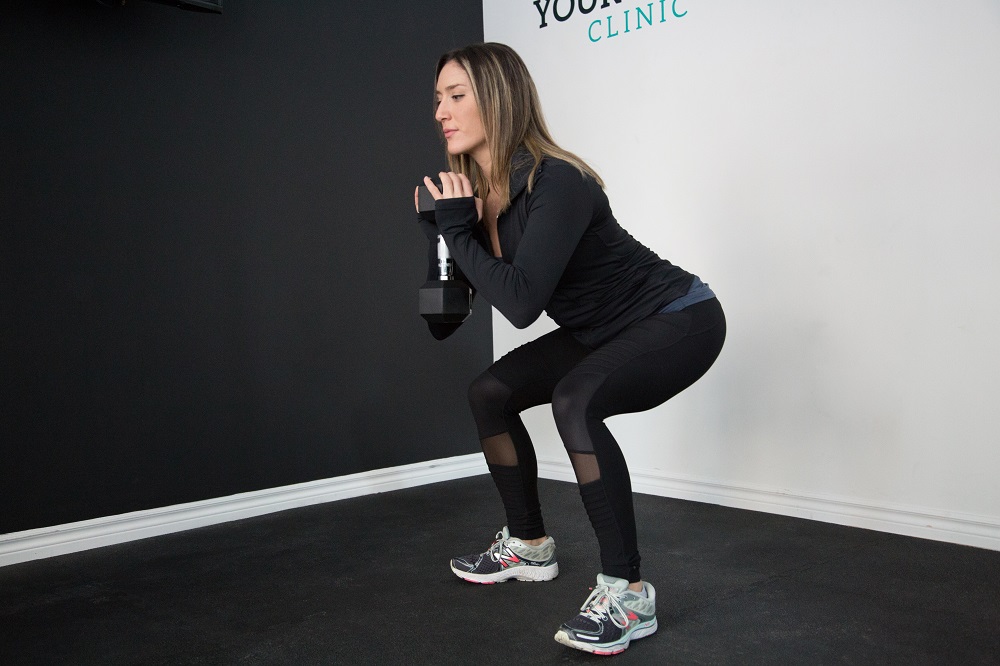
Progression: a) Use a resistance band effectually your thighs, just above your knees; b) Perform jumping squats by taking off and landing in place (remember to land softly).
Single-leg Squat
This modification of the squat volition help strengthen the quadriceps and gluteal muscles, as well as amend lower limb command and balance.
Go along your knees aligned over your toes. Stand with one leg off the ground and held out slightly in front of your trunk. Cross your arms in front of your chest and practise not lean forward. Lower into a squat position on your stance leg so that your knee is at about 60 degrees of human knee flexion (as shown in effigy). Avert rotation and tilt of the hips. Slowly return to the start position. Complete 5 on each leg, and then repeat every bit many times as possible with good control.
Research studies take shown that beingness able to perform 22 or more than single-leg squats correctly (i.e. with good form) may help reduce your risk of knee joint injury.one
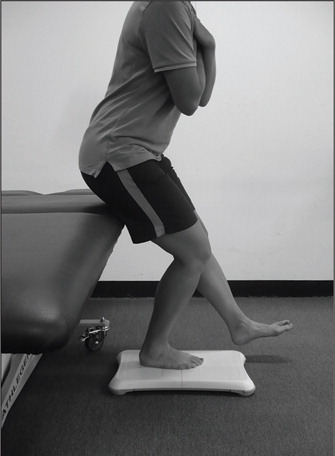
Progression: a) Once yous can perform 25-30 on each leg with good control, increment the depth of the squats to 70 degrees, and then after to 80 degrees of knee flexion; b) Perform squats while holding a dumbbell in each mitt, or a medicine ball in forepart of your breast; c) Stand up on a Bosu ball or another uneven surface (e.k. sofa absorber, pillow) to add more than difficulty for balance and cadre command; d) Perform a faster drop down into the squat followed by a tedious return to the beginning position.
Lunges
Lunges are a straightforward manner to help strengthen your lower body. When practiced from dissimilar angles, lunges are a functional movement that help strengthen your body in ways that do good everyday movement.
Outset past standing upward tall. Step forrard with 1 pes until your leg reaches a lxx-90 degree angle. Your dorsum genu should remain parallel to the footing and your front end genu should not go by your toes. Outset with one gear up of five for each leg and repeat as many as you can with proficient control
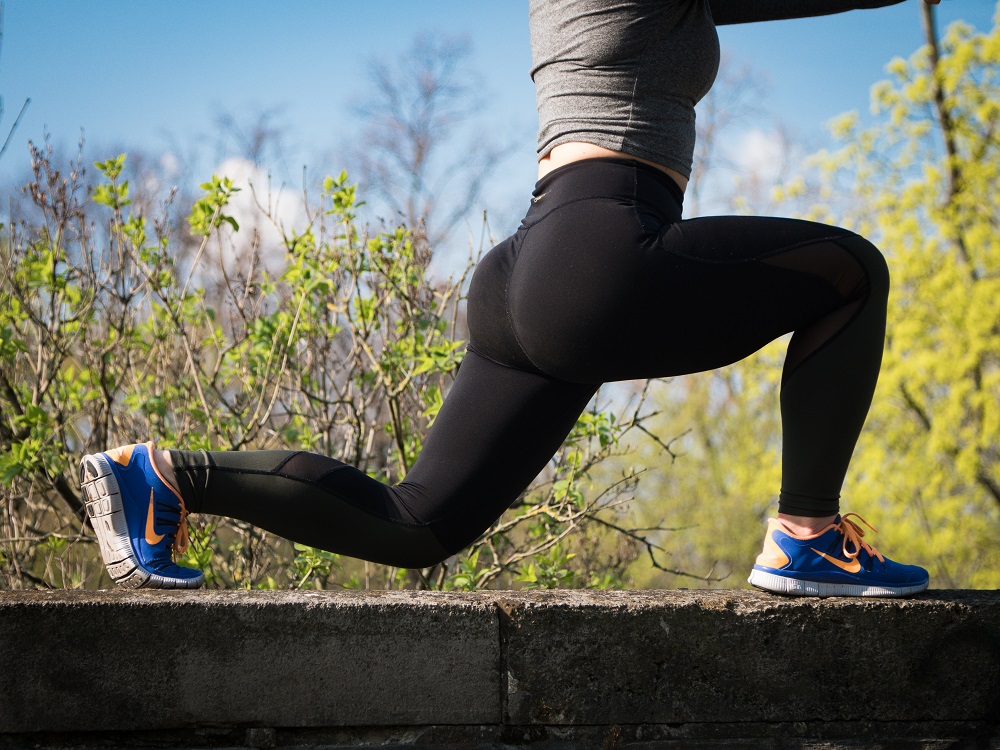
Progression: a) Once you tin can perform 20-30 on each leg with adept control, increment the depth of the lunge to fourscore degrees, and then later to 90 degrees of knee flexion; b) Perform lunges while holding a dumbbell in each hand; c) Lunge forward onto a Bosu ball or another uneven surface (e.g. sofa cushion, pillow) to add more difficulty for balance and cadre command; d) Perform a faster drop downwards into the lunge followed by a slow render to the starting time position; due east) Try jumping lunges with controlled landing, alternating legs.
Gluteal Bridges
Not only exercise gluteal bridges strengthen the glutes, but they also work the core, hips, hamstrings and quadricep muscles.
Lie on your back with your knees bent and your artillery past your sides. Clasp your buttocks and lift upwardly to create a bridge. Go along equal weight on each leg and straight alignment from your shoulders to your knees. Be careful not to push down on your cervix or shoulders – use your buttocks to do the work!
Start with ane set of 10, belongings each lift for 5 secs. Increase the number of repetitions as your strength increases.
Progression: a) Once you can perform xx repetitions holding for 10 sec each, change to single leg bridges; b) Add an unstable surface such as a brawl or cushion under your feet to challenge your balance and core; c) Utilise an unstable surface while balancing on a single leg; d) When using a ball equally an unstable surface and when in the contracted position, with weight through both legs, roll the brawl towards you and and then back earlier lowering to the basis.
Crab or Monster Walk
The Crab or Monster walk are excellent ways to strengthen the gluteal and hip abductor muscles. When choosing a resistance band for these exercises, select 1 with enough tension that you lot feel fatigued after 8-10 steps.
For the Crab Walk, identify the resistance band directly above the knees. Open the legs slightly wider than hip width autonomously and turn the feet slightly outwards. Stretch the band past rotating the thighs outwards and proceed the knees in line with your feet. Keeping the knees rotated outwards and tension on the band, lower yourself into a slight squat position; sticking your bottom out backside y'all every bit if y'all were about to sit down. Take a half step sideways against the resistance of the band. Make sure the other leg stays withal, pushing out against the band. Complete five sets with eight steps each.
For the Monster walk, place the resistance band around your legs betwixt your knees and ankles (higher up the legs will exist easier). Stride out wide and then that your anxiety are betwixt hip-width and shoulder-width apart. Footstep forward and out to the side with one human foot, and then stride forward and out to the opposite side with your other foot. You want to take "monster" big steps, keeping your feet equally broad apart as yous tin can while moving forward. Then walk backwards in the same style. Try not to rotate your hips while walking.
Progression: incorporate a squat equally function of the walk. Consummate 5 sets with 8 steps each.
Bound Downward
Incorporating "jump downs" into your exercise program volition aid to better your landing skills, and strengthen your core, hips and quadriceps.
Start with a step pinnacle of 6 inches and increase the height of your jumps every bit you progress. Start past standing on the pace and gently jump downwardly to land in front of the step. Remember to proceed your hips straight and knees in line. Start with i prepare of viii-10 landing with equal weight on each leg. Build up to 20-24 well-controlled landings.
Progression: a) Increment the superlative of the step as your force and control increases; b) One-leg bound downs starting with a six inch footstep height, using one pes to take off and state; c) 2-legged jump down, but and then immediately jump upward after landing to improve your dynamic strength and agility.
Plank
When done correctly, the plank is a great way to strengthen your core and dorsum.
Perform a bones plank by placing your elbows on the ground directly underneath your shoulders with your anxiety hip-width apart. Keeping knees off the flooring, lengthen your spine and tighten your abs, contract your gluteals and keep your body straight from head to heels (option to proceed knees on the flooring as a beginner or place your hands on an elevated surface).
Brand sure your legs and hips stay parallel to the ceiling. Tuck your hip bones forward toward your omphalos to increment your abdominal and gluteal muscle engagement. Make sure your back is flat and your caput and cervix are in a neutral position. Bulldoze your forearms into the floor. Hold for 10 to 20 seconds. Slowly increment your hold upwards to one infinitesimal as your strength increases.
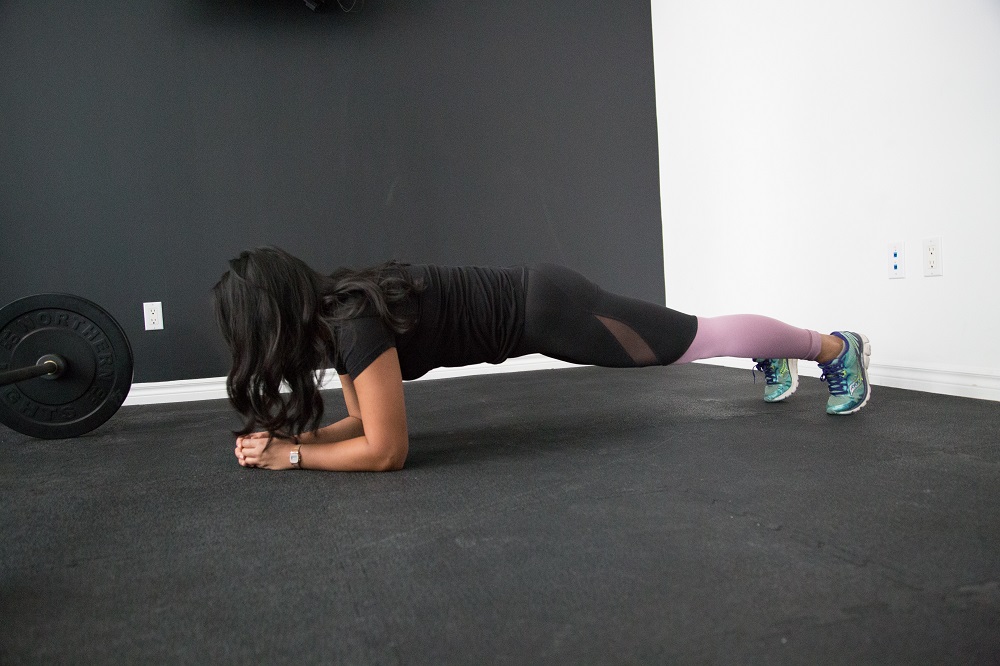
Progression: a) Once you tin hold your plank up to 1 infinitesimal, perform a straight arm plank by placing your easily on the ground directly underneath your shoulders with your anxiety hip-width autonomously. Press through your shoulders and micro-curve your elbows; b) perform either a forearm or straight arm plank but raise ane arm and/or the opposite leg.
Side Plank
Face your entire trunk to one side with your legs stacked on superlative of i another. Prop your trunk up on the mitt or elbow while keeping your feet stacked. Raise your top arm to the ceiling and appoint your hips to piece of work your obliques. Option to driblet to your bottom knee for more than stability or place your lesser elbow (bent) on an elevated surface.
Your optimal form looks like a straight line drawn from your feet to the top of your head, with your knees, hip, and shoulder all parallel! Concord for 10 to 20 seconds and and then switch sides. Slowly increase your hold up to 1 minute as your strength increases.
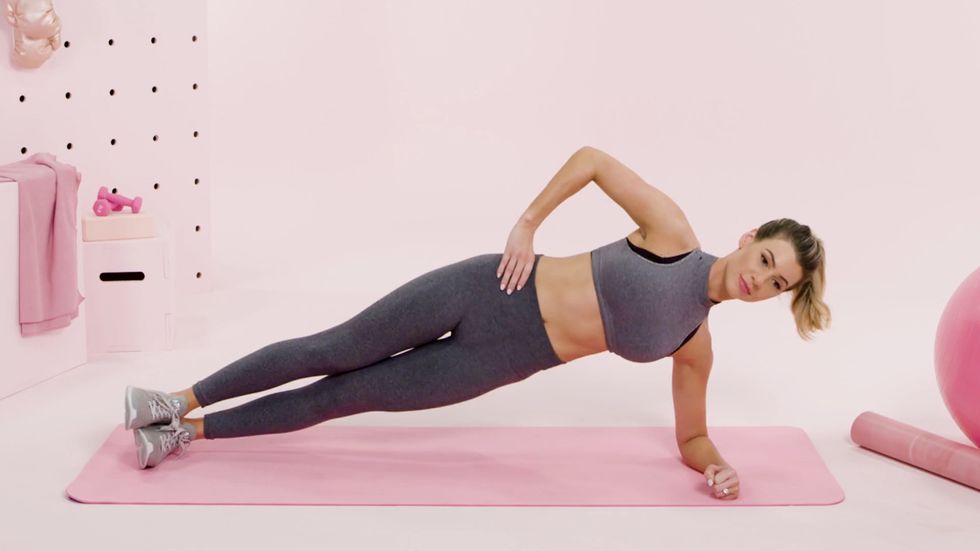
Progression: One time you can hold your plank upwardly to 1 minute, raise and lower the top leg.
DOWNLOAD THE #KNEES4SKIS BROCHURE
Disclaimer: These exercises are meant equally a guide only. Please consult with your Physician or Physiotherapist prior to engaging in any exercise programme or if you are experiencing pain that persists for several weeks.
Good Contributors

Dr Mark Heard, Orthopaedic Surgeon, Banff Sport Medicine Clinic

Lynne Richardson, Physiotherapist, Rocky Mount Rehab & Sports Medicine Clinic
Source: https://bsmfoundation.ca/knees4skis-8-essential-exercises-to-help-reduce-knee-injury/
0 Response to "How To Strengthen Knees For Skiing"
Post a Comment